Increasing purchases and reducing return rates through AI-powered size visualization by focusing on post-maternity shoppers needs
User Research · E-commerce UX · Conversion Optimization · AI-powered Solution

Overview
Objective
Understanding the needs and challenges of women updating their wardrobe after maternity leave, and help them feel more confident in clothes online shopping.
My Role
- User researcher
- UI designer
Tools
Discovery & Validation Canvas, Screener Survey, Interview, Card sorting, Figma, AI visualization tools
Duration
- • 5 weeks
- • Winter 2025
Project in a glance
- Uncertain sizing after maternity leave:
Women updating their wardrobe after maternity leave often feel uncertain about sizing and changing clothing needs.
- Hesitation, abandoned carts, or product returns:
This uncertainty can cause hesitation, abandoned carts, or product returns.
- Key project question:
How might we create a feature that builds confidence when shopping?
- User research to identify pain points:
Conducted user research to identify key pain points and behaviors.
- AI-powered size-visualization feature:
Designed an AI-powered size-visualization feature to help women intuitively select the right size.
- Better understanding of clothing fit:
Provided better understanding of how clothes fit their body.
- Increased confidence and reduced returns:
Increased confidence, encouraged purchases, and reduced return rates.
Process
- •Desk research
- •Discover the brief and persona's needs
- •Map assumptions and prioritize which ones to test
- •Formulate initial hypotheses
- •Conduct a screener survey
- •Turn hypotheses into measurable interview questions
- •Conduct interviews with potential users (5 participants)
- •Analyze interview transcripts
- •Evaluate insights, compare them to hypotheses
- •Define actionable next steps
- •Brainstorm solutions
- •Evaluate ideas for feasibility and impact
- •Create the initial wire frame
- •UI - Prototype

Case Study
Initial Hypothesis:
How might we create a feature that delivers confidence when shopping?
User research
Since this was a research-driven project, I conducted user research to understand users' needs and pain points around confidence. I used a Discovery and Experience Canvas to map the insights and create better alignment.
Testing and User research insights
I evaluate my assumptions through a survey (13 responses) and 5 in-depth interviews with potential users.
- •Survey (Screener Survey)
- •One on one interview
- •Card Sorting ( For analyzing initial solutions)
- •Analyzing the result by the Experience Canvas
1. Time Pressure & Decision Fatigue
- •Moms have limited time and often shop at night after their baby sleeps.
- •Finding the right size is the biggest challenge in the decision-making process.
- •Returning products creates additional stress and frustration.
2. Body Changes & Sizing Uncertainty
- •Women need clothes that fit their changing body shape, especially around the belly.
- •Some needs are short-term (1–6 months), while others are long-term due to permanent body changes after pregnancy.
- •Standard size guides often do not reflect their current body shape.
3. Functional Yet Stylish Clothing
- •Moms want clothes that are baby-friendly but still stylish.
- •"Baby-friendly" changes depending on the baby's age.
- •Clothes should be easy to wash, stain-resistant, comfortable, and wrinkle-free.
- •Trends are less important than practicality and comfort.
4. Changing Needs Across Stages
- •A mother's needs change during different stages: pregnancy, newborn care, breastfeeding, returning to work, and post-maternity life.
- •Moms returning to work early have different needs.
User research outcome:
Based on the research findings, Here is the principles I came up with:
1. Reduce Decision Stress
Simplify size selection and reduce uncertainty, helping moms make faster and more confident decisions within limited time.
2. Support Changing Body Shapes
Provide more personalized size guidance that reflects post-pregnancy body changes, especially around comfort and belly fit.
3. Adapt to Different Life Stages
Acknowledge that needs change across stages (newborn care, breastfeeding, returning to work) and provide relevant support.
4. Increase Sense of Control
Help users feel informed and in control of their time, money, and wardrobe.
Design Direction
Most impactful design opportunity
After analyzing the out comes , I found the sizing system a strong opportunity area for both user confidence and business impact.
This issue was critical because:
- •It affects not only post-maternity shoppers, but all users.
- •It is one of the main reasons for product returns, increasing business costs.
- •Solving it would make shopping more convenient for busy moms.
Design Hypothesis:
How might we help users find the right size with less effort and more confidence?
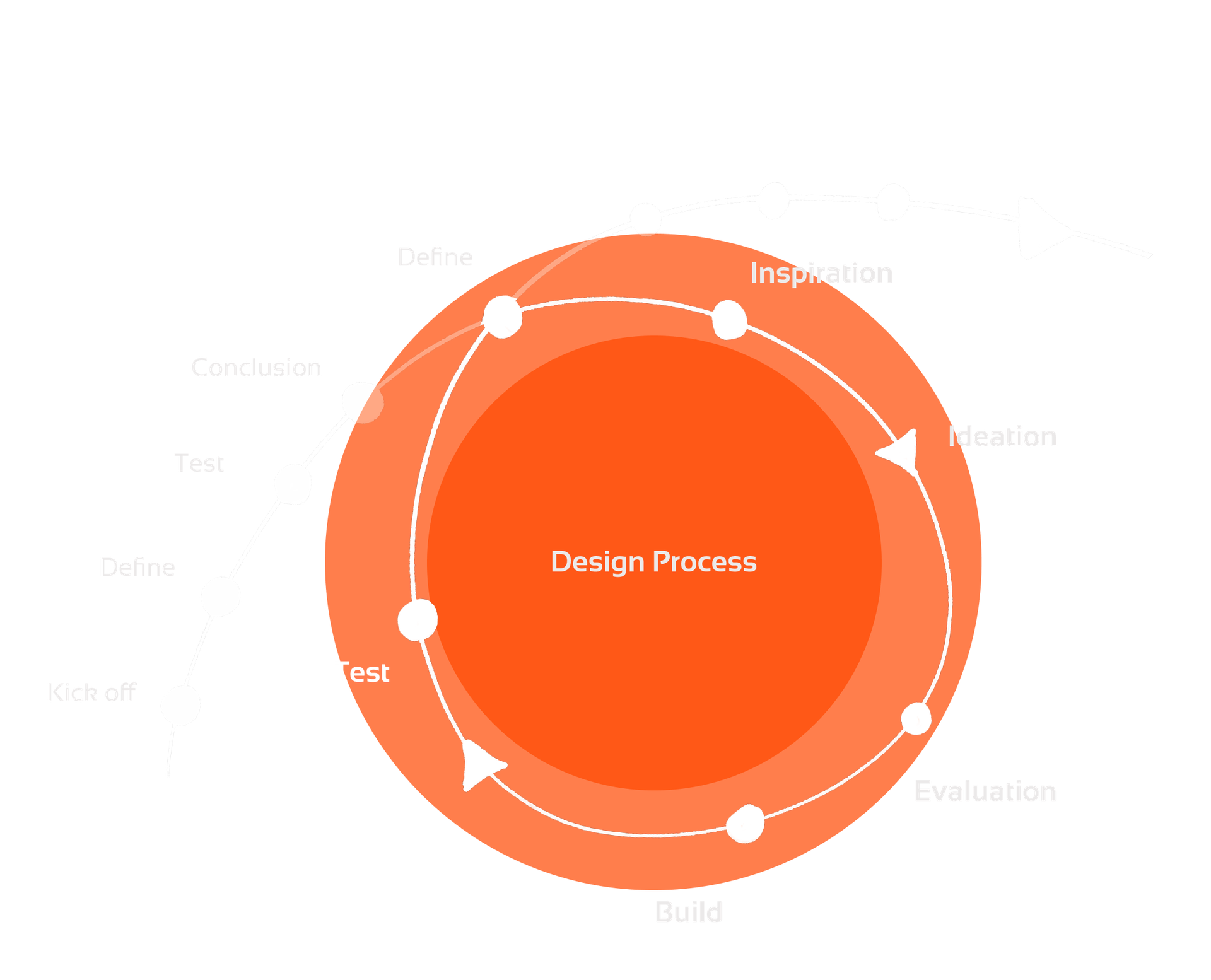
Design Process
Design process in a glance
In this phase, I developed a sizing solution by applying design methods from ideation to evaluation and final UI design.
- •Desk research on similar features across different e-commerce platforms to understand existing solutions
- •Story board and user scenario in decision making and choose the size stage
- •Ideation tools: Brainstorming, Crazy 8s, Brainwriting
- •Idea evaluation: Effort–Impact Matrix
- •Creating a user flow: To better understand the existing shopping journey and align the new idea with the whole flow
- •Wireframing
- •High-fidelity UI design
User experience in choosing a size As Is:
Through user research and user scenario analysis, I identified a gap between how brands present products online and how users experience them in reality. This gap impacts users' body confidence and their purchasing decisions.
Stage: Deciding what size to choose
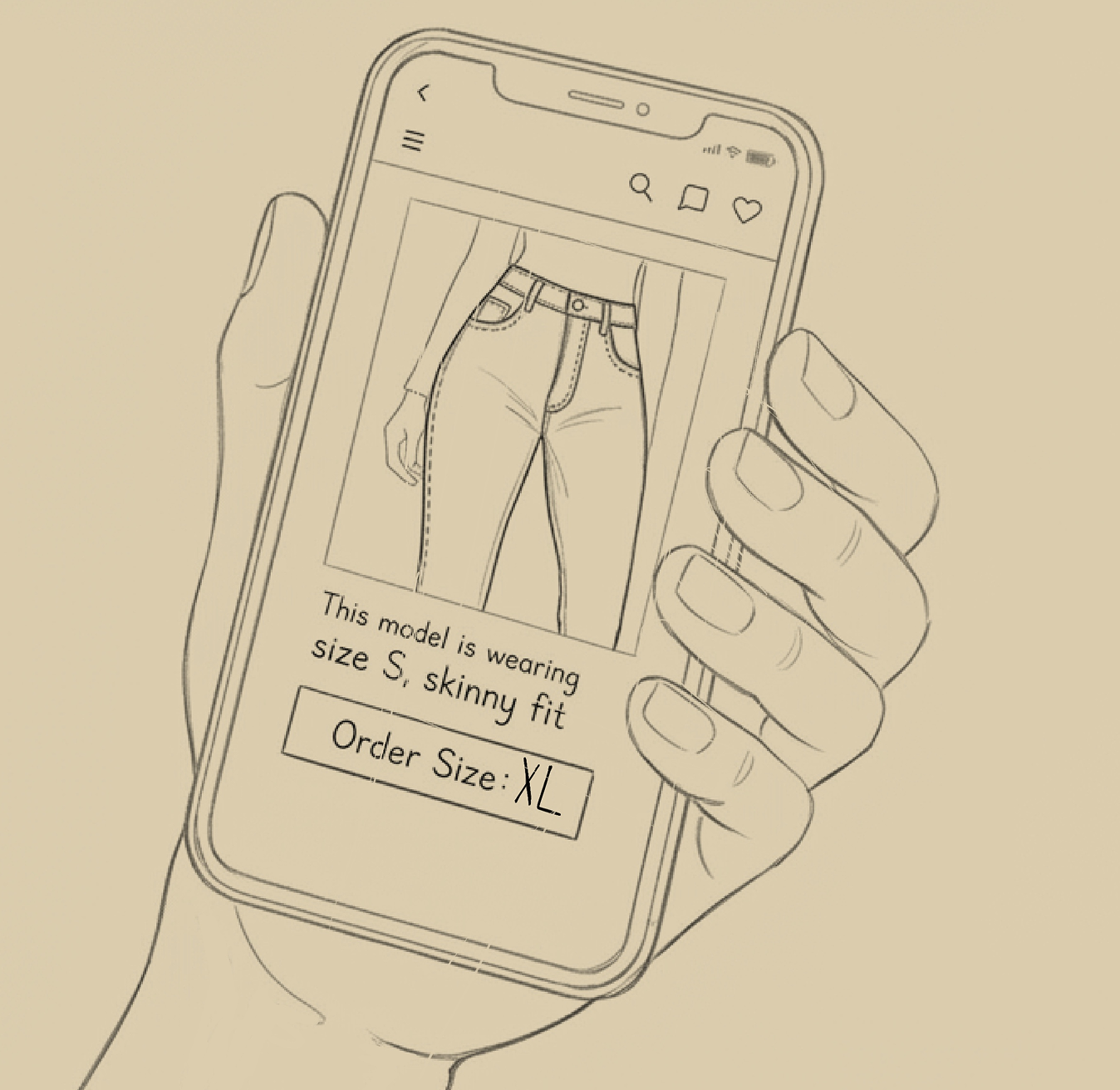
The product page shows: "Model wearing size S (176 cm)". She compares the model's body with her own to guess which size will fit her.
Stage: Waiting for delivery
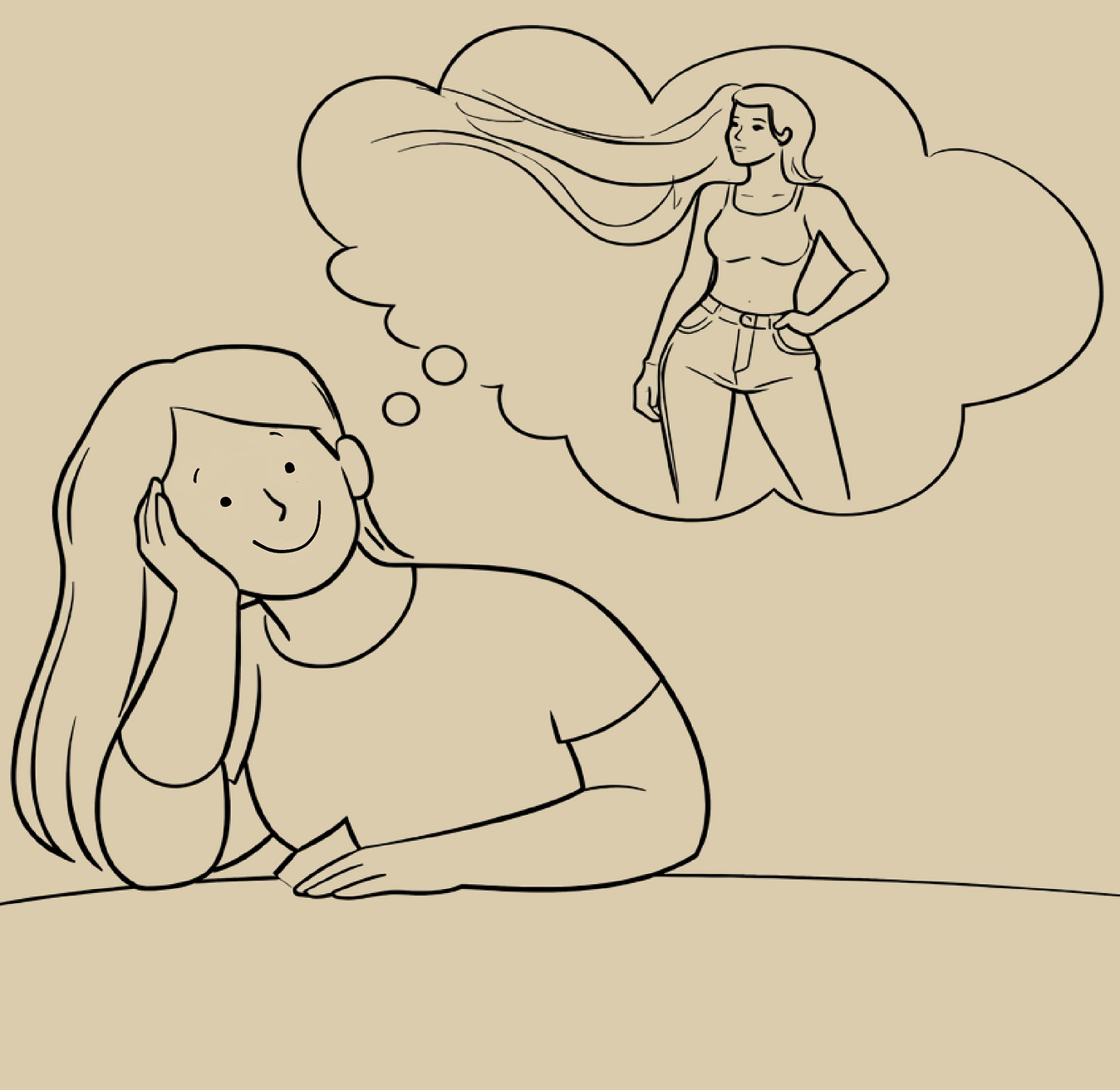
Excited and hopeful, she waits for the delivery. She imagines herself in the new jeans, picturing her body like the model she saw online.
Stage: Trying the jeans
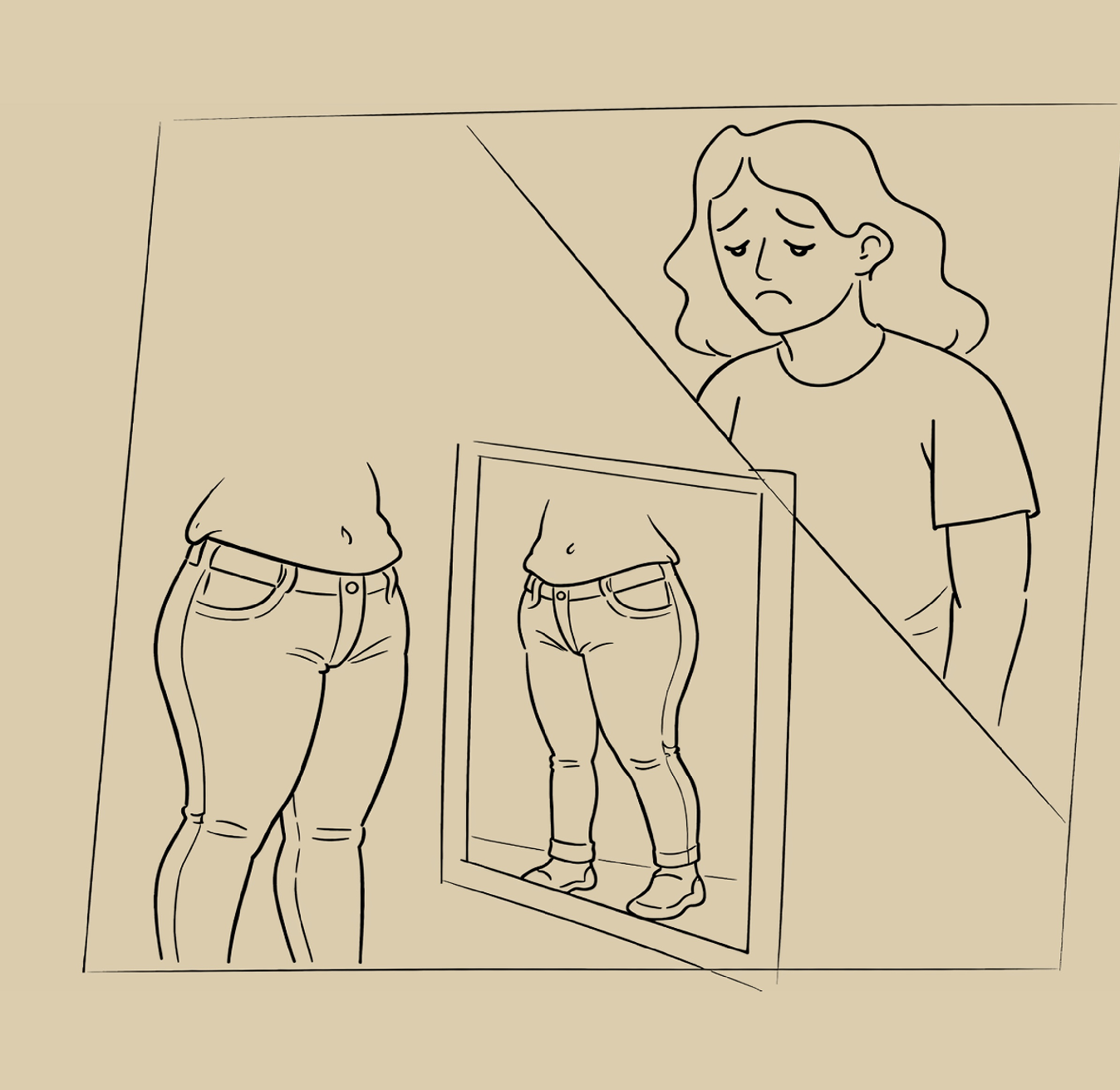
The package arrives. She tries the jeans, but they look different on her body than in the photos. Even though they fit well, she feels disappointed.
Design objective:
Let's present products on realistic variation of body types instead of only showing them on small-size models!
How the idea fits into the existing user flow
Here you can see the user flow of a returning user during the shopping process and where the proposed idea fits in.
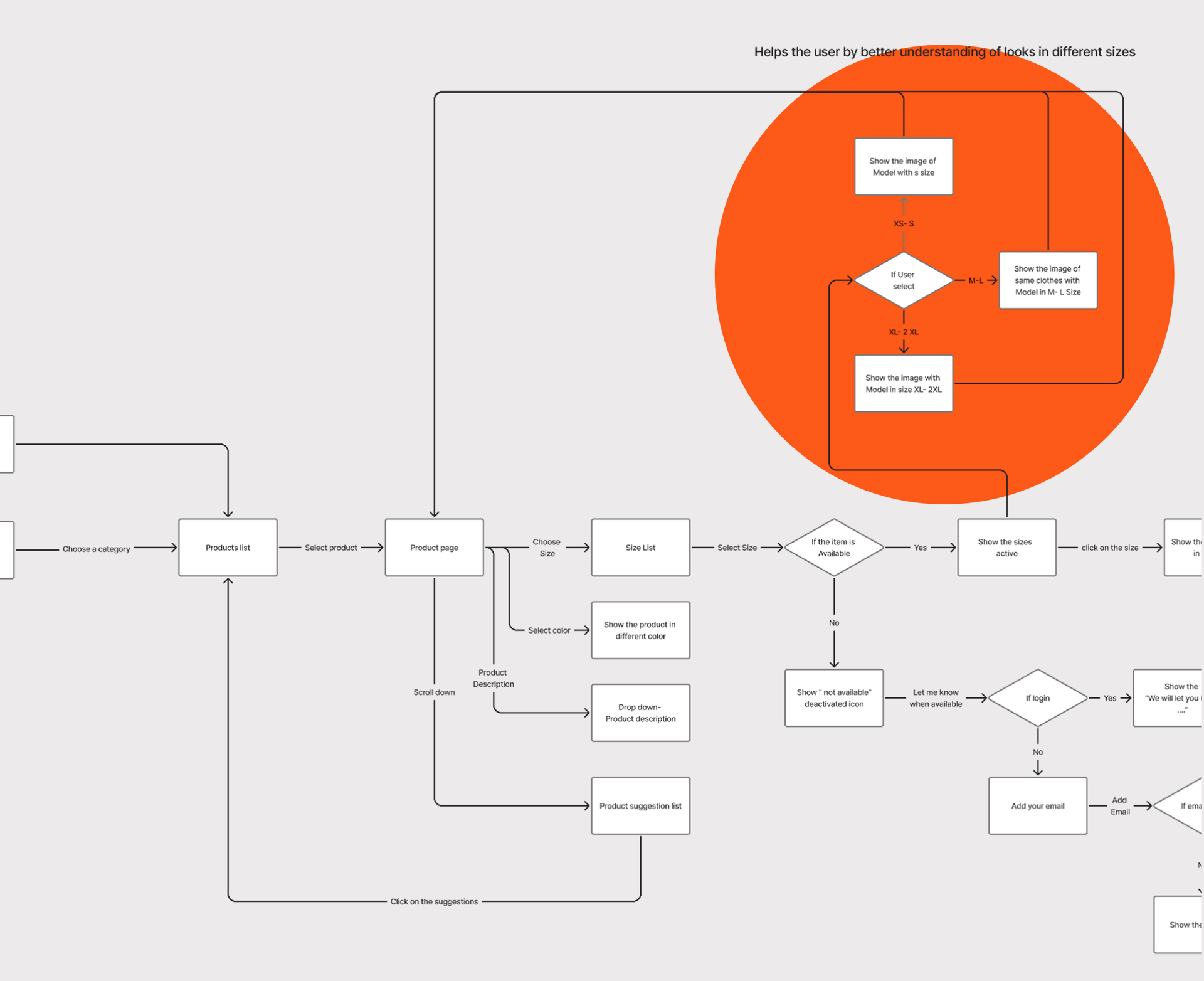
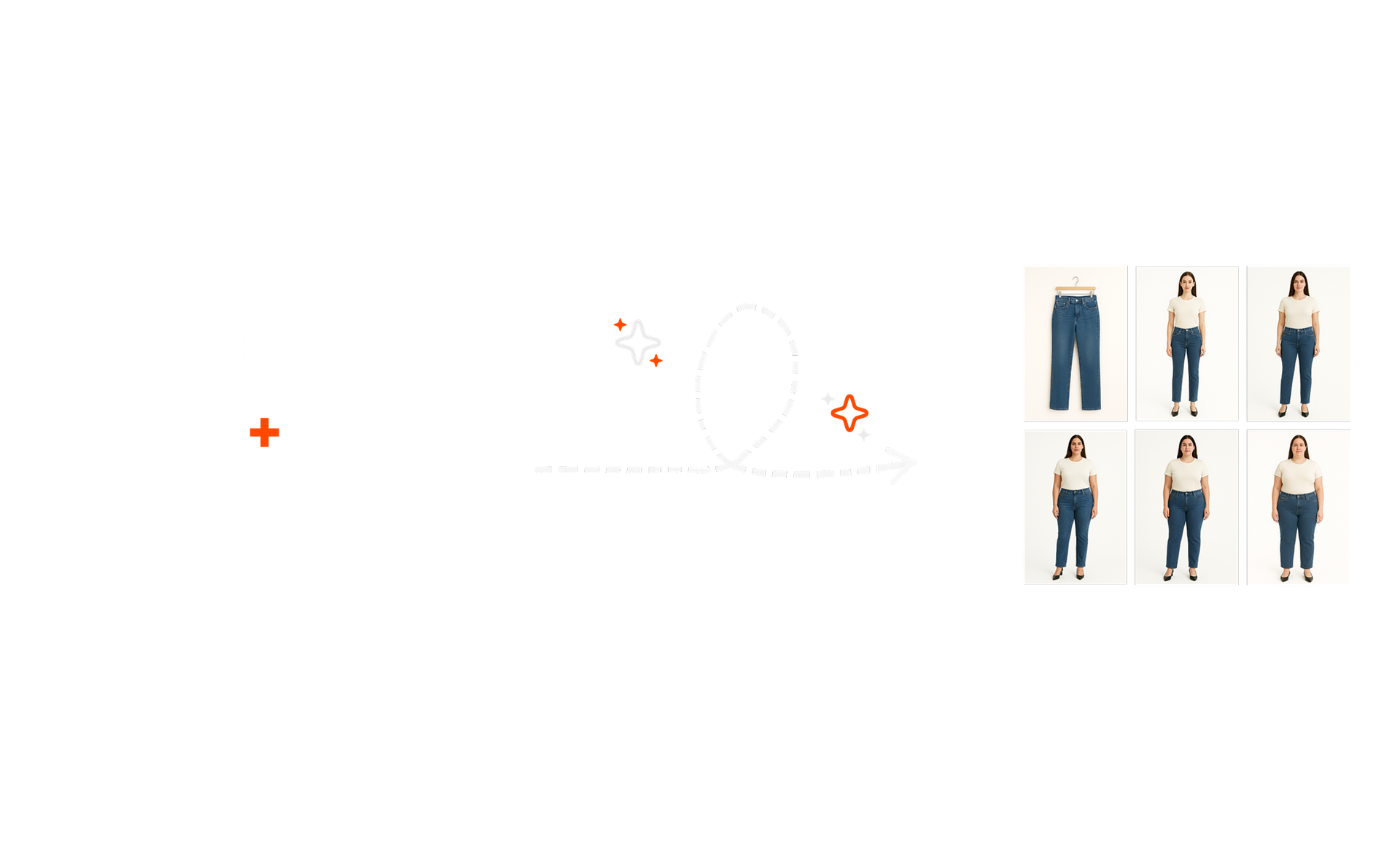
AI modeling image generation
I generated images of models with different body sizes and shapes wearing the same outfit and style.
- •Better alignment between user expectations and reality.
- •Helps users see more realistic representations of their bodies.
- •Promotes acceptance by showing models with real body types.
- •Increases confidence in online shopping.
- •Reduces return rates.
- •Easy to implement using AI tools.